


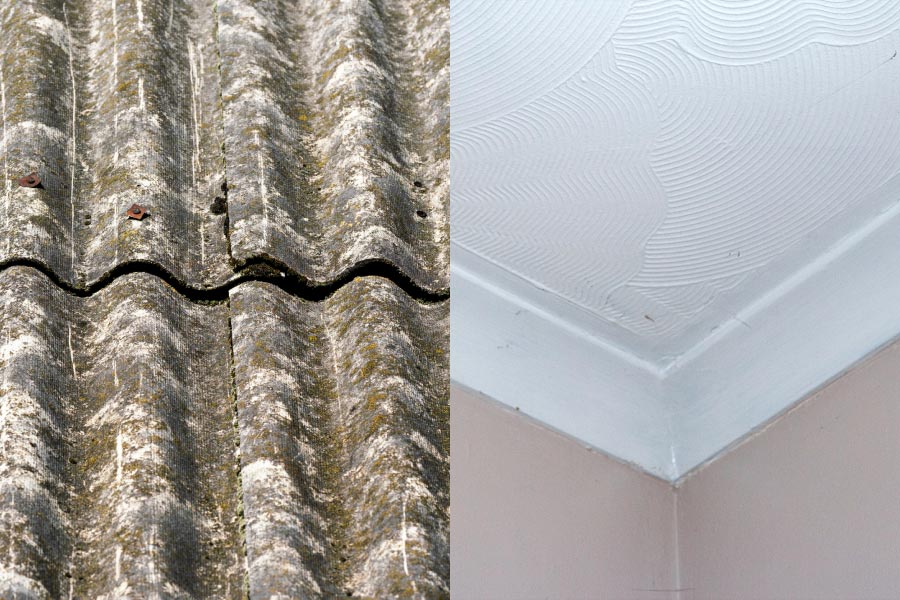
Asbestos was widely used in Irish construction from the 1940s through to its EU-wide ban in 1999. Properties built or refurbished before 2000 – and particularly those built before 1980 – must be treated as potentially containing asbestos-containing materials (ACMs) until proven otherwise.
Under Irish law, employers and building owners have a legal duty to identify ACMs before any demolition, refurbishment or maintenance work begins. The Health and Safety Authority (HSA) is the regulatory body. Chartered building surveyors play a critical role in identifying risk and triggering the appropriate survey and management obligations.
In Ireland, houses built or refurbished before 2000 may contain three main types of asbestos:
- Chrysotile (White Asbestos): The most common type found in Irish homes. It was frequently used in textured coatings (like Artex), vinyl floor tiles, roofing materials, and cement products.
- Amosite (Brown Asbestos): Often found in Asbestos Insulating Board (AIB), which was used for wall partitions, fire doors, ceiling tiles, and behind old fuseboards. It is more likely to release fibres if damaged compared to chrysotile.
- Crocidolite (Blue Asbestos): Considered the most hazardous type, it is rarely found in domestic homes but may be present in older pipe insulation or sprayed-on coatings.
While six types are regulated in Ireland (including tremolite, actinolite, and anthophyllite), the types highlighted are the primary varieties encountered in residential buildings.
Asbestos is dangerous when fibres become airborne and are inhaled. Intact, undisturbed ACMs in good condition present minimal immediate risk. The danger arises when materials are damaged, drilled, cut, sanded or disturbed during maintenance or renovation work. Often the presence of asbestos comes to light when building works commence.
Kelleher & Associates pay particular attention during pre-purchase survey to any material we feel may contain asbestos. We encounter asbestos containing materials very regularly during the course of our inspections. It is a priority for us that our clients are made fully aware of the risks of asbestos and the importance of further investigation by an asbestos specialist if that is considered necessary.